
Which airlines minimize environmental impact? Cirium provides an answer…
21 Apr 2026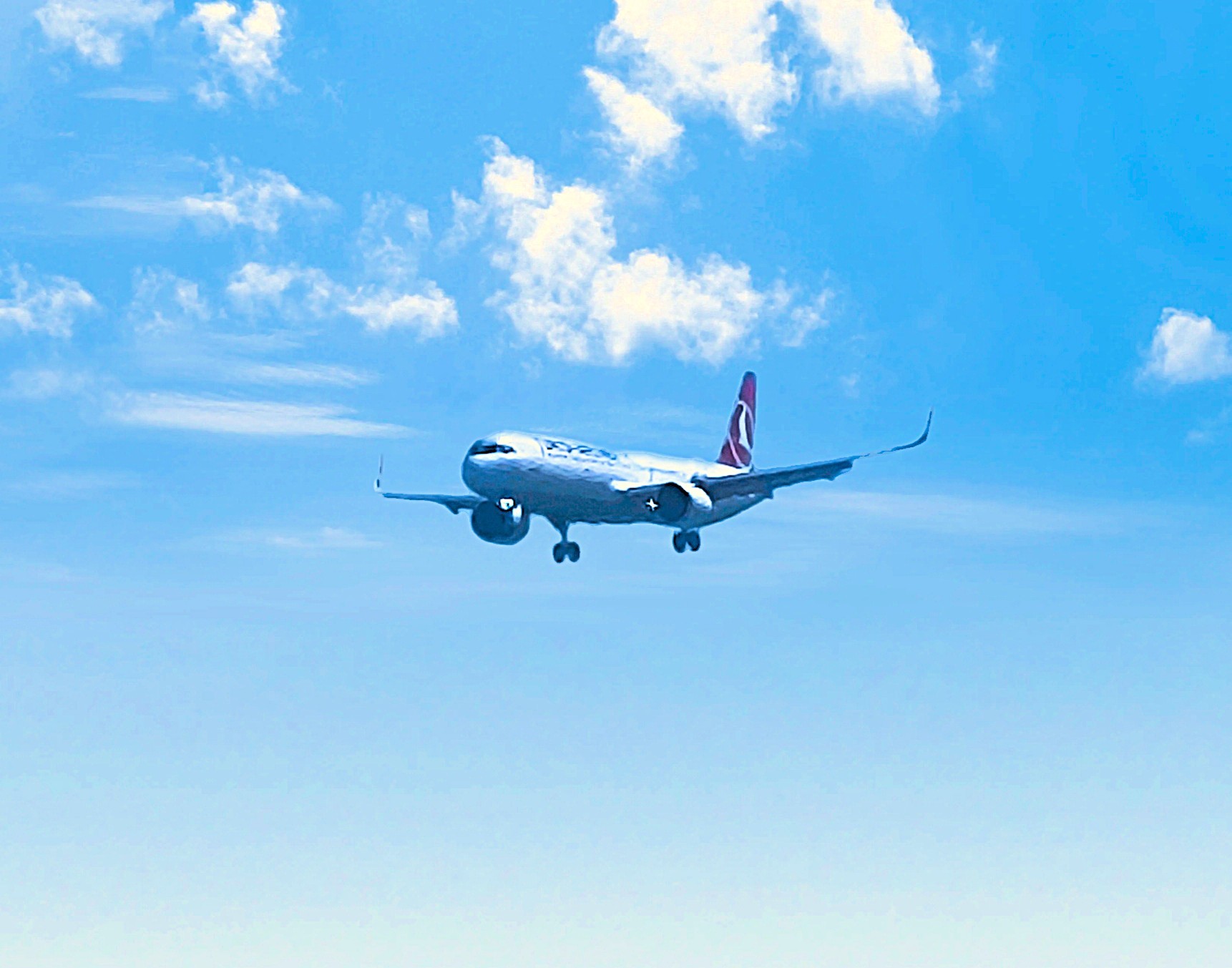
Singapore-based Scoot has been named the world’s most emissions-efficient airline in Cirium’s 2025 EmeraldSky Annual Review, taking the top position from last year’s leader, Wizz Air. Qatar Airways, Ryanair, and Turkish Airlines were each recognized as the top three most efficient global airlines, ranked by available seat kilometres (ASK).
Cirium’s industry leading ranking is based on CO₂ per available ASK across the world’s 100 largest airlines. The methodology is independently assured by PwC to ISAE 3000. It groups airlines into Gold, Silver and Bronze tiers based on global performance, which covers the top 15 airlines as well as key regional and route performers.
“Airline emissions performance comes down to decisions airlines can control — fleet choices, seat configuration and how aircraft are deployed on routes,” said Jeremy Bowen, CEO of Cirium. “The airlines at the top of these rankings have got those fundamentals right, and it shows. Better emissions efficiency and lower fuel bills go hand in hand.”
Scoot is the first Southeast Asian carrier to lead in global airline emissions efficiency rankings. Its average seat density of 242 seats per aircraft, operating on longer average sectors, placed it in the lead position this year. The results reinforce a consistent pattern across the industry.
Airlines operating younger fleets with higher seat density continue to outperform their peers on emissions efficiency, with low-cost carriers dominating the top of the rankings. Wizz Air placed second (after placing first in 2024), followed by TUI Airways, Air Europa and Frontier Airlines, with all these carriers ranking in the top five globally and earning Gold status.
Scoot of Singapore had the best performance with 51.0 grams of CO₂ per available seat kilometre (ASK). Wizz Air came second at 52.9g, followed by TUI Airways of the UK at 53.6g, Spain’s Air Europa at 53.9g and Frontier Airlines of the USA at 54.1g.
Top 15 Airlines by Emissions Efficiency (Global)
Gold: Ranks 1–5 | Silver: Ranks 6–10 | Bronze: Ranks 11–15
Rank Airline Base Country PAX CO2/ASK (g) CO2 emissions (mt) Flights per Year (thousands) Fleet Age (years) Avg. distance (km)
1 Scoot Singapore 51 2.0 65 6.7 2,157
2 Wizz Air Hungary 52.9 6.2 335 4.7 1,547
3 TUI Airways UK 53.6 2.2 66 9.7 2,862
4 Air Europa Spain 53.9 2.1 69 10 2,023
5 Frontier Airlines USA 54.1 3.5 208 4.8 1,470
6 TUIfly Germany 54.4 1.6 58 10.6 2,475
7 Virgin Atlantic UK 54.5 2.8 27 6.8 6,566
8 AirAsia X Malaysia 54.8 1.6 20 14 4,177
9 Pegasus Turkey 55.9 3.8 233 5 1,372
10 Jetstar Australia 56 3.7 183 11.1 1,623
11 Condor Germany 56.15 2.29 55 11.2 2,883
12 Spirit Airlines USA 56.77 3.78 217 6.4 1,535
13 Iberia Spain 57.03 4.47 100 11.5 2,831
14 Volaris Mexico 57.33 3.10 180 7.5 1,532
15 IndiGo India 57.36 9.84 796 4.2 1,082
Wizz Air remains among the strongest performers with a fleet averaging under five years, similar to other performers such as Frontier Airlines and IndiGo.
Long-haul operators, in contrast, are closing the gap primarily through fleet renewal, by removing from service older, less-fuel-efficient aircraft. Airlines such as Virgin Atlantic demonstrate that newer wide-body aircraft and higher-capacity configurations can deliver competitive emissions performance even on long-distance routes.
Top Airlines by ASK
The table below reflects the top three most efficient global airlines, ranked by available seat kilometres (ASK). The top 10 global airlines as ranked by ASK, are listed in the full report.
Rank Airline Base Country PAX CO2/ASK (g) CO2 emissions (mt) Flights per Year (thousands) Fleet Age (years) Avg. distance (km)
1 Qatar Airways Qatar 60.0 15.4 198 10.2 4,221
2 Ryanair Ireland 62.7 17.4 1148 10.1 1,264
3 Turkish Airlines Turkey 64.2 15.8 428 9.7 2,332
Regional and Key Intra-Regional Rankings
The tables below reflect regional rankings, as well as for well-trafficked corridors, the Transatlantic and Transpacific. Across every region, airlines with younger fleets and higher seat density continue to lead within their markets. Results in each region carry their own story as metrics of comparison change.
North America (Intra-Regional)
Rank Airline CO₂/ASK (g) CO₂ Emissions (Mt) Flights (000) Fleet Age (years) Average Distance (km)
1 Frontier Airlines 54.5 3.0 185 4.8 1,402
2 Spirit Airlines 57.4 3.1 185 6.5 1,463
3 WestJet 67.0 2.4 175 11.5 1,348
Europe
Rank Airline CO₂/ASK (g) CO₂ Emissions (Mt) Flights (000) Fleet Age (years) Average Distance (km)
1 Wizz Air 53.1 3.9 222 4.6 1,462
2 Jet2 57.9 2.8 110 13.6 2,206
3 Transavia 59.9 2.0 116 10.5 1,491
Southeast Asia
Rank Airline CO₂/ASK (g) CO₂ Emissions (Mt) Flights (000) Fleet Age (years) Average Distance (km)
1 VietJet Air 64.5 1.4 107 8.2 941
2 Singapore Airlines 66.7 0.90 45 5.9 1,181
3 Lion Air 67.1 1.1 90 13.3 828
Latin America
Rank Airline CO₂/ASK (g) CO₂ Emissions (Mt) Flights (000) Fleet Age (years) Average Distance (km)
1 JetSmart 57.9 1.1 92 3.1 1,033
2 Volaris 58.8 2.0 137 7.6 1,297
3 VivaAerobus 61.4 2.1 157 9.1 1,069
Transatlantic
Rank Airline CO₂/ASK (g) CO₂ Emissions (Mt) Flights (000) Fleet Age (years) Average Distance (km)
1 Virgin Atlantic 53.7 1.8 16.9 6.5 6,759
2 Air Canada 54.9 2.7 24.4 14.4 6,108
3 Aer Lingus 56.2 1.2 15.1 9.0 5,793
Transpacific
Rank Airline CO₂/ASK (g) CO₂ Emissions (Mt) Flights (000) Fleet Age (years) Average Distance (km)
1 Air Canada 56.2 1.6 8.9 10.2 10,178
2 Delta Air Lines 57.5 1.9 11.3 6.1 9,945
3 Cathay Pacific 59.8 2.5 10.8 9.0 11,933